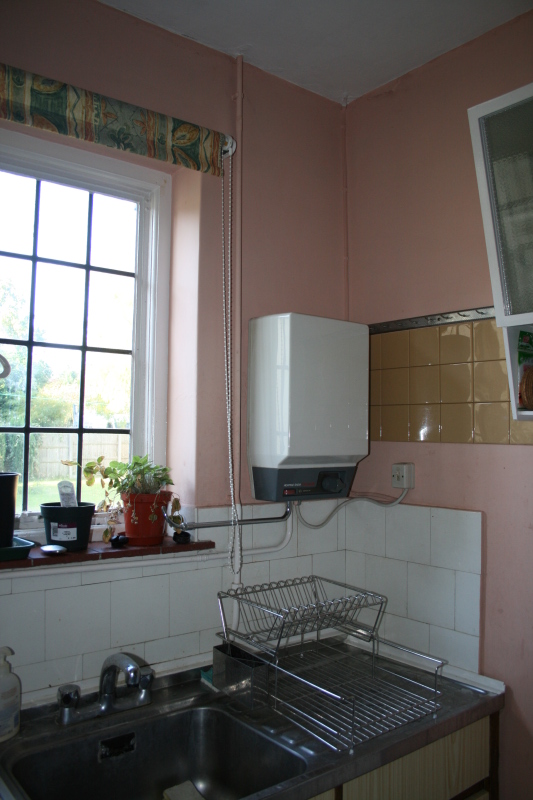
Mary was away in Glasgow for Orla’s Hen so I thought I’d sort out a few bits and pieces around the house. One of these is removing an obsolete instantaneous water heater from the kitchen. This is good because the water supply pipe to it goes across the bottom of the window ledge and we’re having the window opening enlarged downwards to get a biggger window in, so we get a better view and more light.
The first step is to disconnect the electricity supply. If you look closely, you’ll see the cable go to a wall mounted switch and then up along the corner and then disappear into the ceiling. Obviously, you can’t just cut the cable. I needed to trace it back to the junction box. So I went upstairs to pull a few floorboards. It was a good opportunity to learn more about the structure of the house.
I pulled up the carpet and then the underlay. Then I removed some floorboards. It was dusty and dirty and full of debris. Have to clean this up and label all the pipes someday. It would also be good to put in some sound insulation.
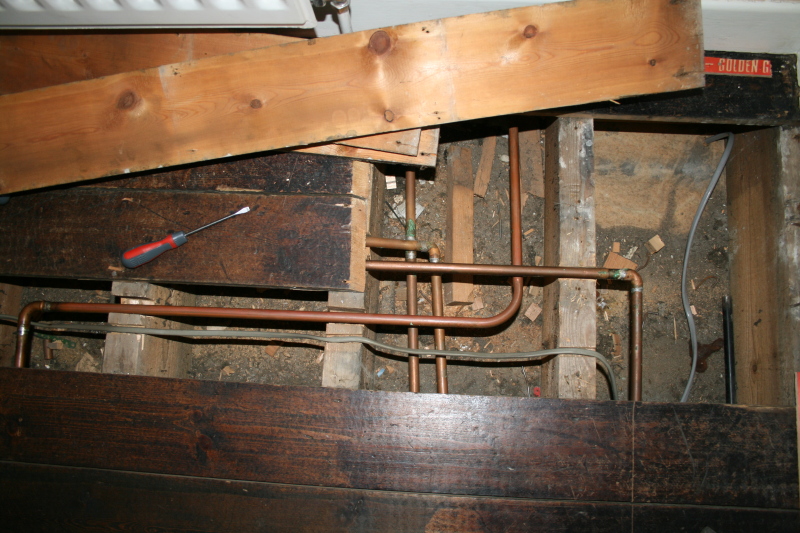
So you can see the cable coming through on the right of the picture. I traced the cable along and found a
junction box. I went downstairs to cut off the supply. Now that it was safe, I unscrewed the cover to the junction box and disconnected the cable. My trusty electrical testing screwdriver came in handy and a double check that the terminals were not live. While the floorboards were up, I took note of where the pipes were. In the picture, from bottom left to right, there’s hot water, central heating flow, central heating return and mains cold water.
Next up is the water supply pipe. The pipe leads left to a tee off the mains water. My plan was to cut the pipe above and below the tee and then replace the section with a straight bit of (reclaimed) pipe.
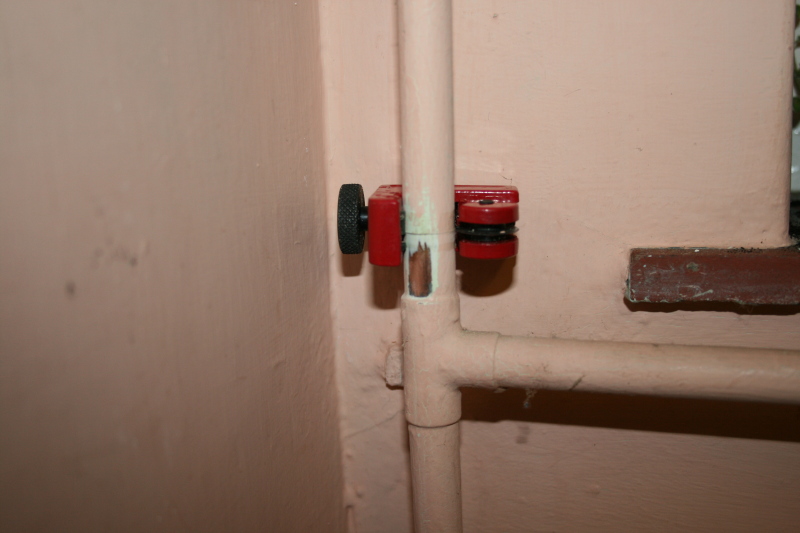
I turned off the water at the stopcock. You can see the first cut in action here. There was not enough clearance to use a conventional pipe cutter so I used this mini one. A few revolutions and the pipe was cut. You have to screw in the wheel slowly and cut a shallow groove first, otherwise you end up cutting a spiral.
Another cut below the tee and the water heater is liberated forever. Now I had to scrape off all the paint and clean up the end of the pipe for soldering.
At this point, I noticed that the pipe started dripping. This is bad because the water takes away the heat and you can’t solder it properly.
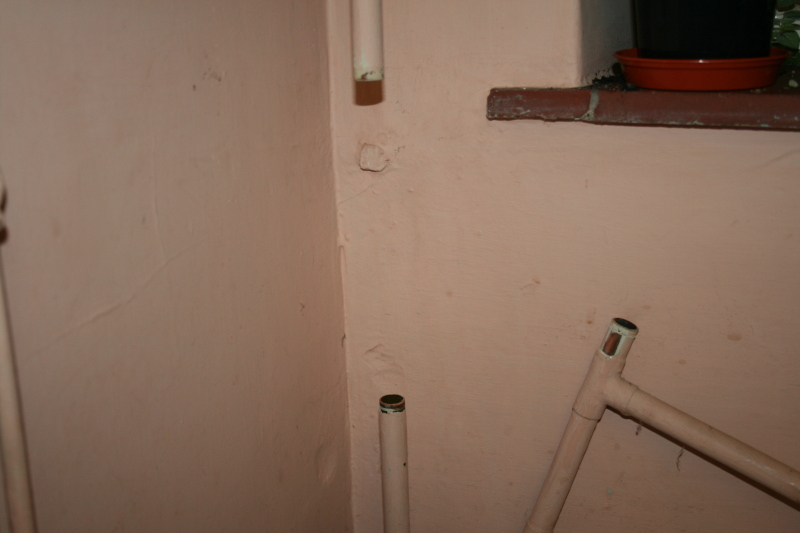 I made sure the stopcock was turned off completely, but the drips were still there. So I used an old plumber’s trick which is to insert some squashed up bread up into the pipe. This has the effect of absorbing and stopping the dripping for long enough for me to solder the joints. When the supply is turned back on, the water makes the bread disintegrate and it’s flushed out of the tap.
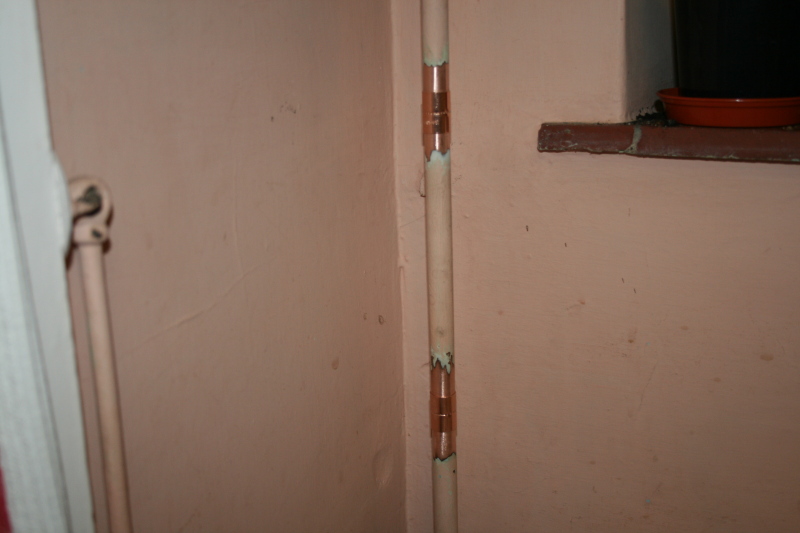
I cut a section of the removed pipe to fit the gap, minus a small amount for the end feed straight couplers and cleaned the ends. Before we solder, the ends have to be scrupulously clean and free of paint, oxidation, grease and dirt. Emery cloth and wire wool were my friends. After applying flux paste to the pipes and fitting, I was ready to solder.
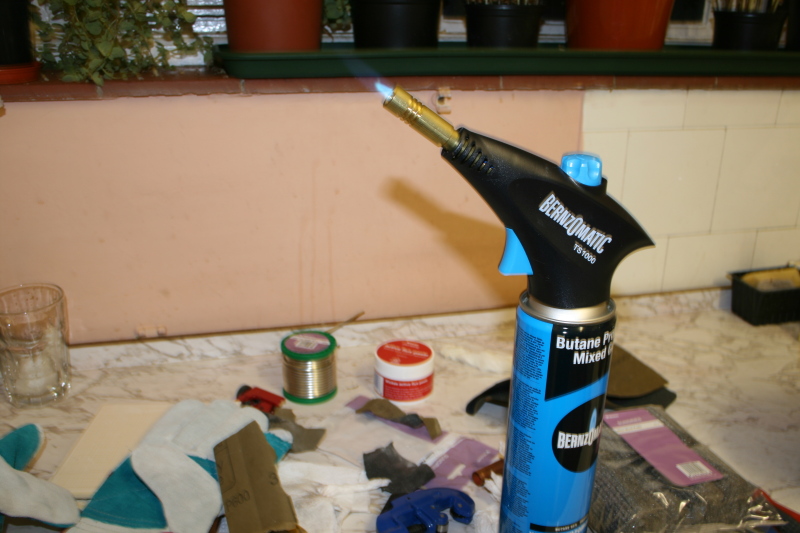
I couldn’t wait to test out my new toy, a blowtorch. As well as being useful for plumbing, my crème brûlées will be perfect!
Soldering end feed joints was easier than I thought. You just have the heat the joint evening by moving the flame. As we are taught in school, the tip of the inner blue cone is the hottest part of the flame. Once the flux started sizzling, I touched the joint with the solder and it was sucked into the joint, hence the other name for these fittings “capillary”. Another interesting thing I found out was the difference between soldering and brazing is the temperature at which the process happens. Above 450°C and we’re brazing. Here we are soldering. Solder is not allowed to have lead in it anymore, so it’s mainly tin with some copper, silver, bismuth and traces of other metals.
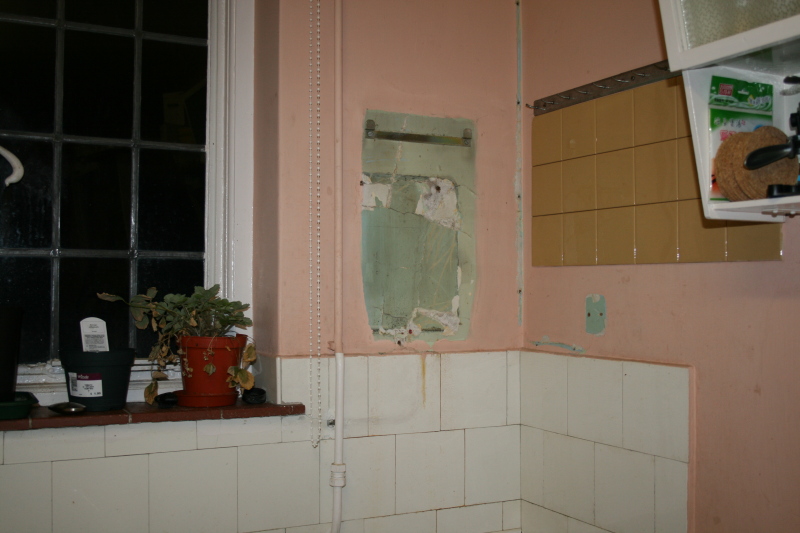
I know it’s not pretty, but it’s all going to be redecorated at some point, when we get a new kitchen.

There are two golden rules of plumbing:
1. Know where your stopcock is.
2. Stop any “cocks” who don’t know what they’re doing from fiddling with your water system.
I think you’re about 50% there.
Well done Honda good weekends work, that is a good tip with the bread, be careful with that blowtorch make sure you have no gell in hair when using it.
So – which took longer. The plumbing or the blogging?
Error…sarcasm overload…core dump.
For non technical types, please be aware that the above is very funny.
I hear through the “plumber’s grapevine”, there’s more more plumbing exploits to come.
I can’t wait.
I bet you’ve not had this much fun since you _wet yourself_ as a baby?