We’re having new windows and folding doors put in soon.
The installation of the new doors in the dining room are going to involve cutting out some brickwork. This brickwork currently has radiators hanging on them, so we have to move them.
A picture might help. Here is what it looked like before I moved the radiators:
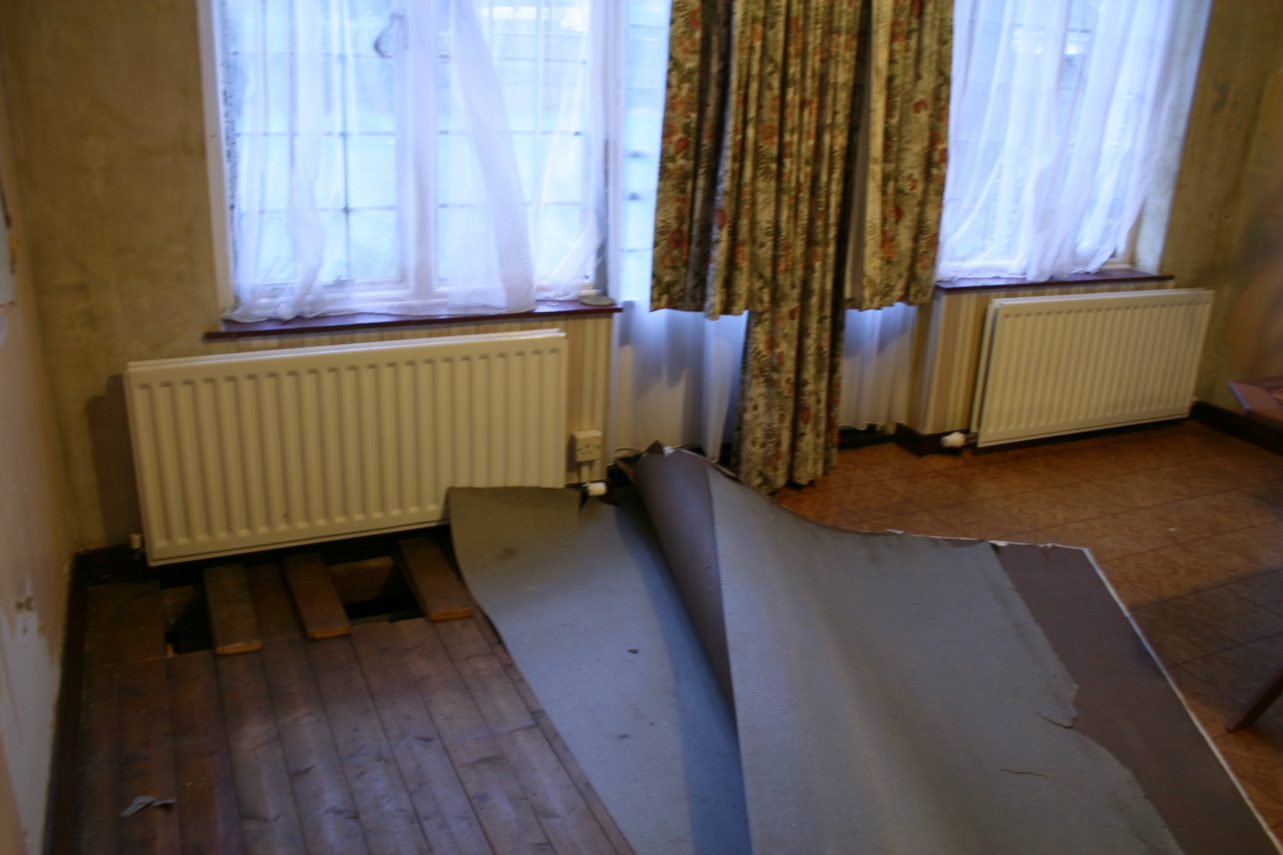
After ripping up the floorboards and a couple of days and cutting my thumb quite badly, i managed to move them.
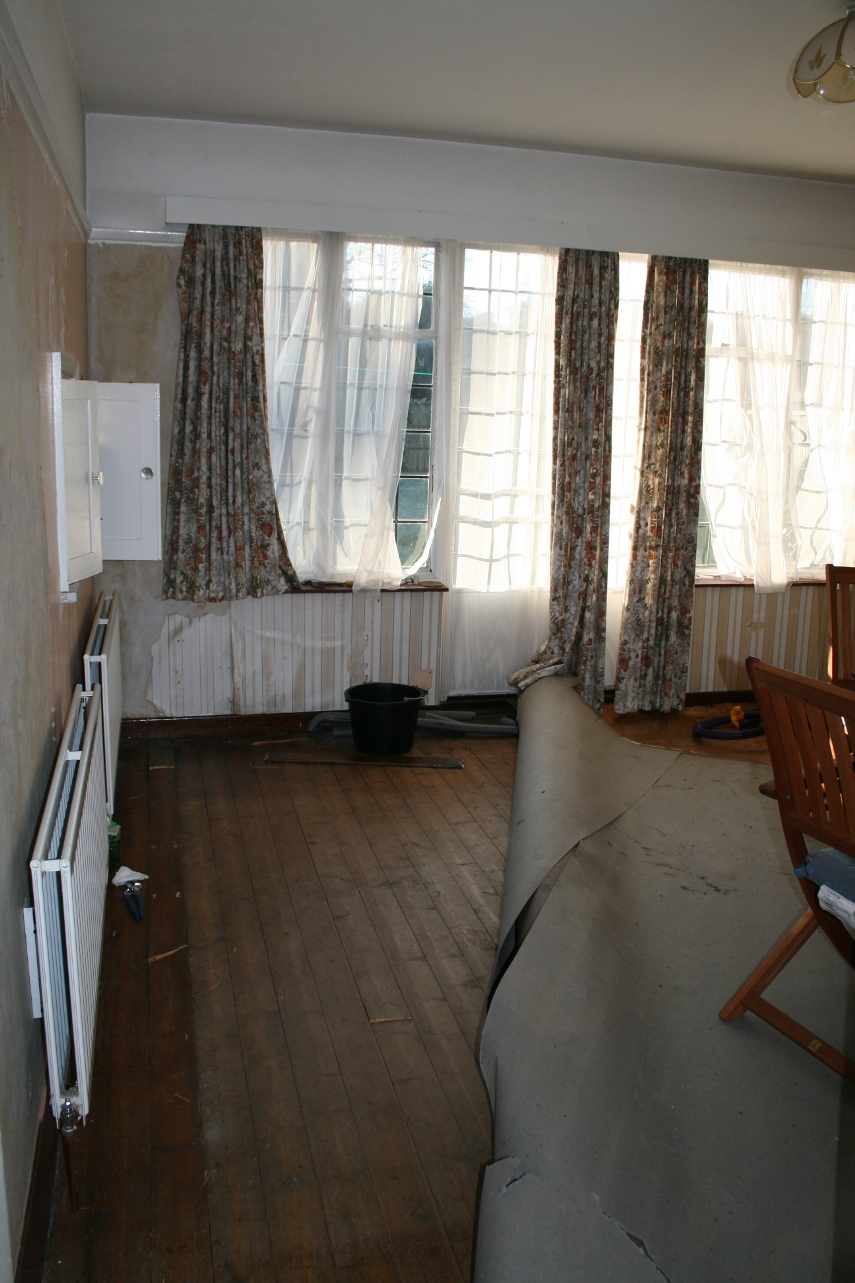
This is what I did:
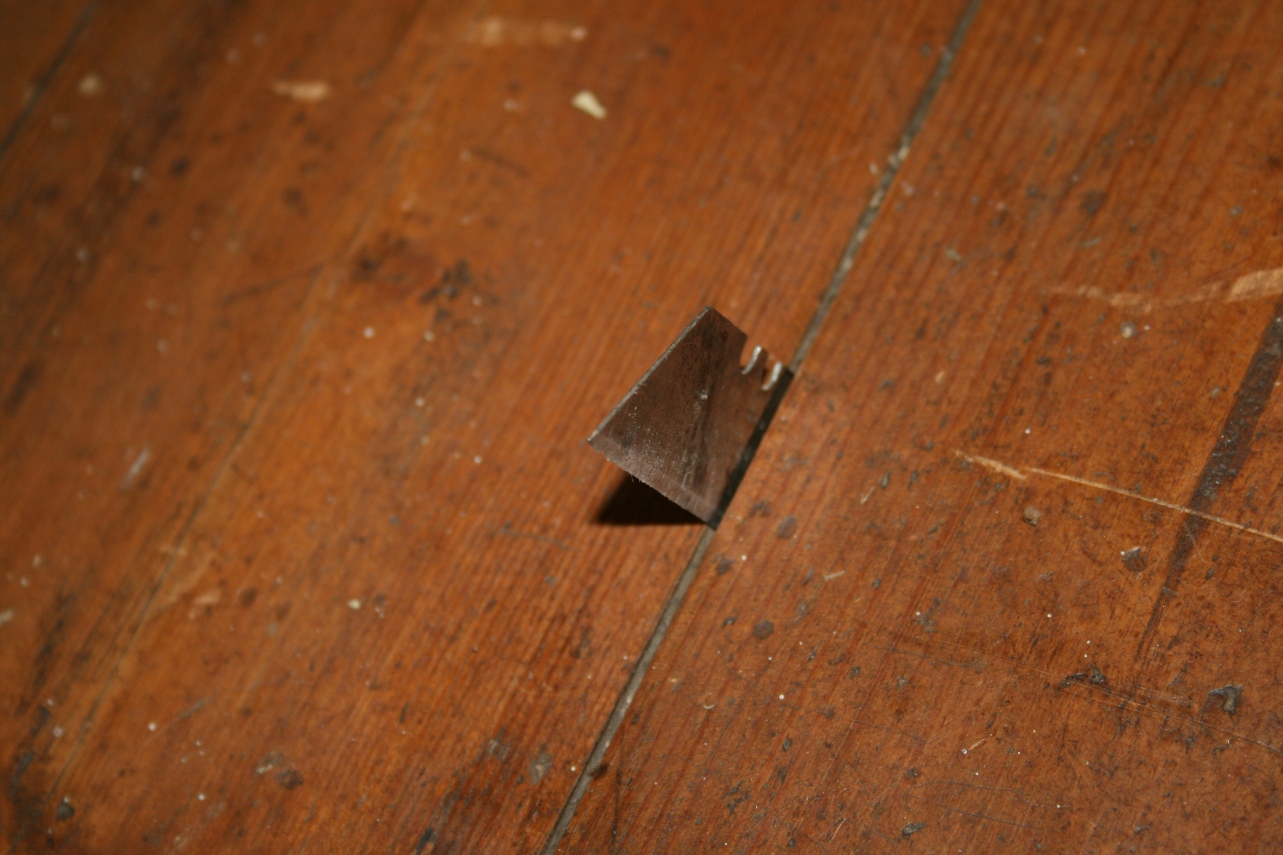
- Removing the floorboards for access. This involved lots of levering and pulling of nails with my claw hammer. The boards are tongue and groove, so i had to break the tongue by tapping a stanley knife blade between the boards along the entire width.
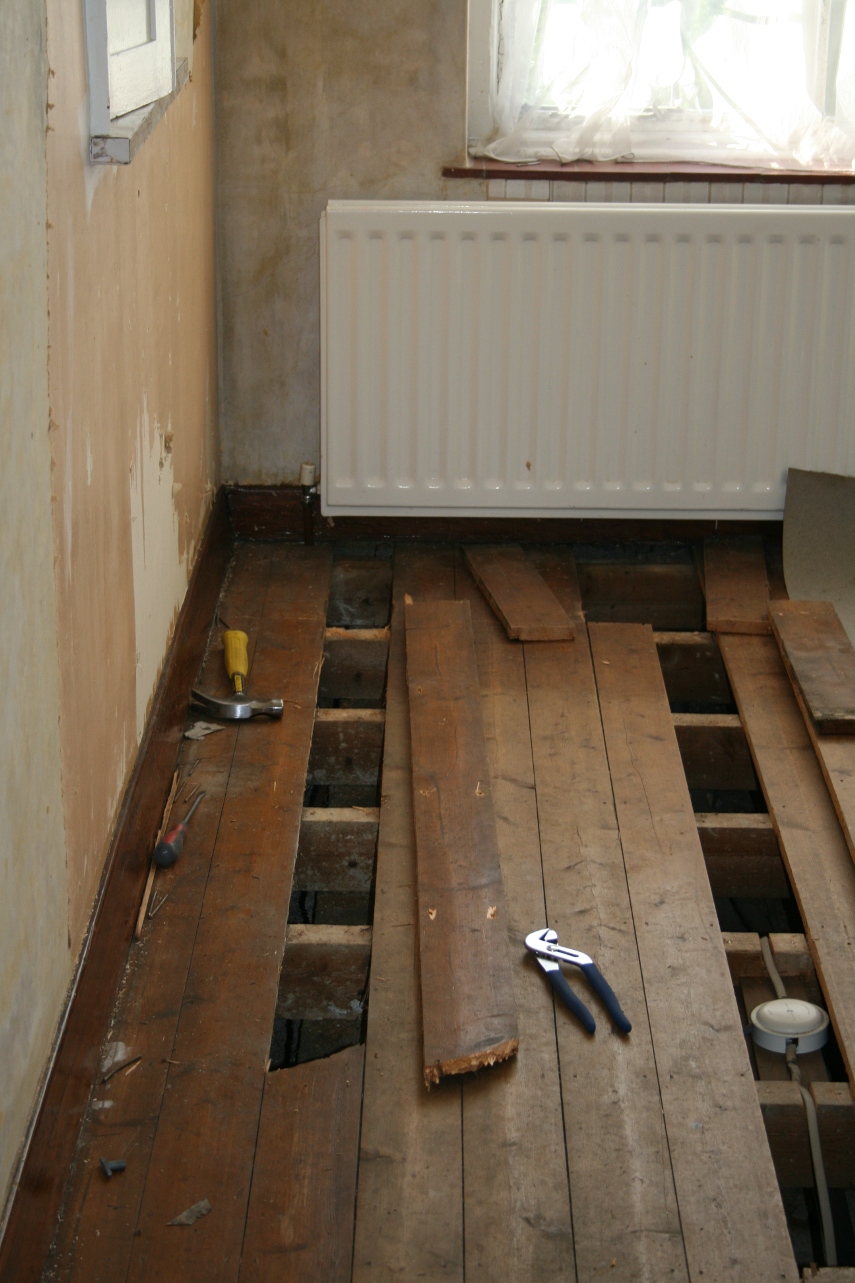
- I can’t just cut the pipes as we would have a flood on our hands, so we need to drain the system first. I shut off the central heating controller and went into the attic to tie up the ballcock ( sounds painful! ) of the central heating feeder tank ( the smaller of the two tanks ). I located the drain cock at the lowest part of the system, which was in the garage, and connected a piece of hosepipe to it. The other end I stuck in the drain. I then opened the valve with a spanner.
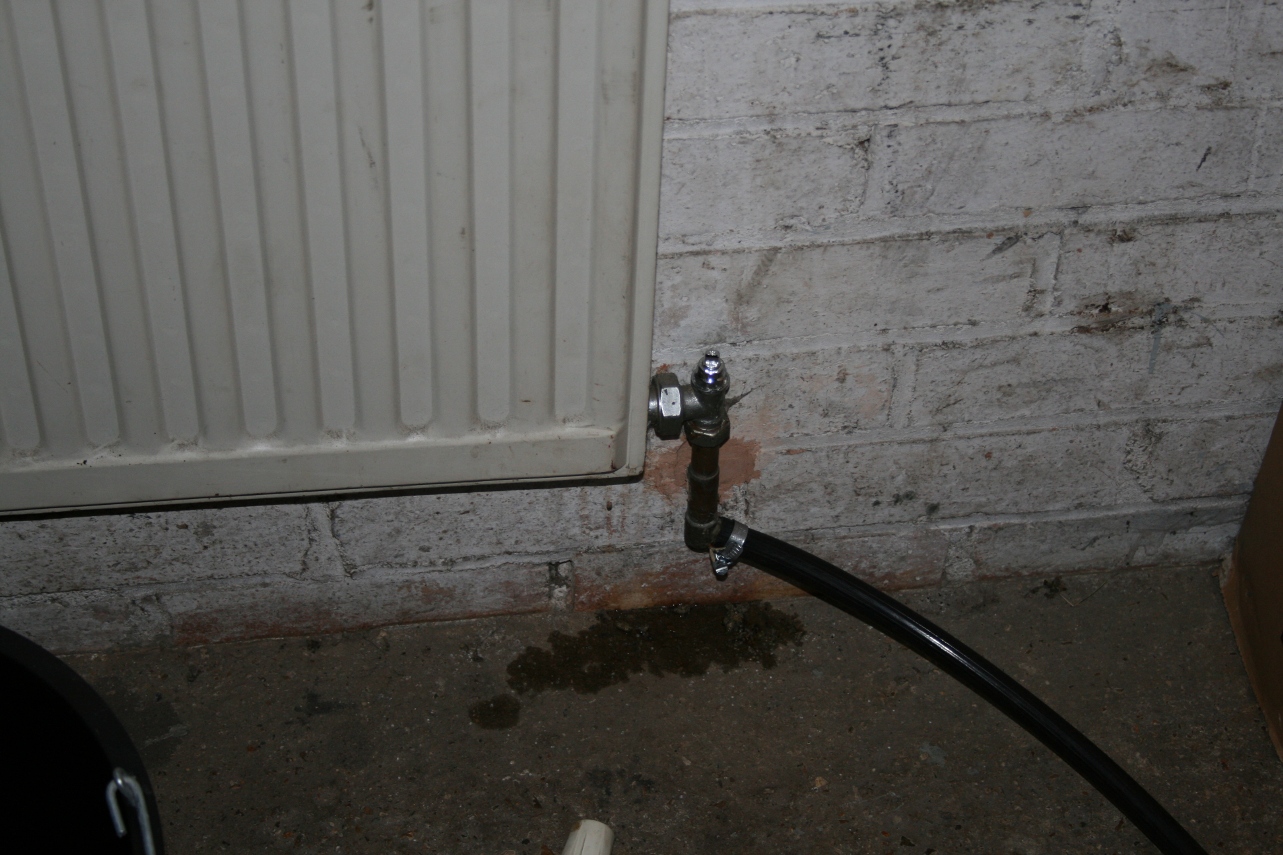
- Gurgling sounds were heard as the system started draining. After a while, I went upstairs to bleed the radiators to speed the process. Later I bled the downstairs radiators.
- With the system empty, I unscrewed the compression fittings holding the valves to the pipe. It was at this stage that the spanner slipped and I cut my right thumb on the TRV pin.
- After applying first aid, I disconnected the rest of the pipes. There was lots of icky black sludginess leaking out from the radiators.
- Next was to lift the radiators off the supports and remove the supports from the wall. I measured new positions and drilled holes and fixed the supports back on the wall. The radiators can now be hung up back on the wall.
- Next step was to re-route and reconnect the pipes. Here, my new soldering skills helped. Also because of the joists in the way, I used some plastic piping. It’s called “barrier pipe”, as it has a barrier to stop air from permeating into it. You obvious can’t solder to it, but you can use compression fittings as long as you use a copper olive rather than a brass one.
- Once this was done, it was time to re-fill the system. Problem is that the system wouldn’t refill. The header tank was full and wouldn’t empty. See my next post.
- Once this was fixed, I refilled the system and because I didn’t tighten the old compression joints on the radiators enough, there was a whole load of water spraying out! I don’t panic very often, but this was an occasion where I did just that. 3 of the 4 joints stopped leaking when I tightened them, but the nut on the 4th one kept slipping. Eventually, I put the nut on the valve ( with the new olive ) first and then put the pipe in place. This worked and I has a sigh of relief.
- The system was refilled and I bled the radiators starting from the downstairs. Also bled the pump.
Switched on and warmth at last. We’d been without heat for a couple of days while the system was being working on. Mary was very happy. She cooked us a nice hot curry to warm us up.
0 Responses to “Plumbing #2”